
Verdict
Buy itA confident, gorgeous, occasionally messy sequel that trades some of the original's suffocating solitude for accessibility and spectacle — still one of the year's most distinctive open-world experiences.
Few sequels arrive with as much baggage as Death Stranding 2: On the Beach. The original split audiences right down the middle between people who found its slow, deliberate delivery-simulator loop meditative and those who found it tedious walking-simulator busywork. Kojima Productions' answer this time isn't to retreat from that identity — it's to keep the DNA intact while sanding down enough friction that the sequel plays significantly better, even if a vocal contingent of hardcore fans feel something was lost in the process.
The essentials: bigger world, smoother hands
Sam Porter Bridges is back, now delivering cargo across a reconstructed Mexico and an unnervingly beautiful Australia, connecting isolated settlements to a new "chiral network" against the backdrop of a mysterious organization called Drawbridge. Mechanically, the core loop is unchanged: balance cargo, manage stamina and terrain, build infrastructure that persists asynchronously for other players. What's different is how much more forgiving and controllable Sam feels doing it — smoother movement, better traversal tools available earlier, and a combat system that's actually fun to engage rather than something to be endured.
That last point is the biggest structural shift. Sam now has access to a wider arsenal and more dynamic enemy encounters from the outset, turning what used to be occasional, awkward skirmishes into legitimate action set-pieces. It's a deliberate accessibility play, and reviewers have been split on whether it dilutes the original's identity — but taken on its own terms, it makes On the Beach a far less exhausting game to actually play for forty-plus hours.
The experience: still the best-sounding game around
Where Death Stranding 2 is unimpeachable is atmosphere. The environmental variety is a massive step up from the original's monotonous Icelandic-inspired backdrops — lush jungle, arid outback, storm-lashed coastline all trade off within the same playthrough, and the game's audio design (from ambient wind to Woodkid and Ludvig Forssell's score cues triggering on emotional beats) remains genre-leading. Walking a precarious mountain path in a thunderstorm while a song swells at exactly the right moment is still a trick nobody else in games pulls off quite like Kojima Productions does.
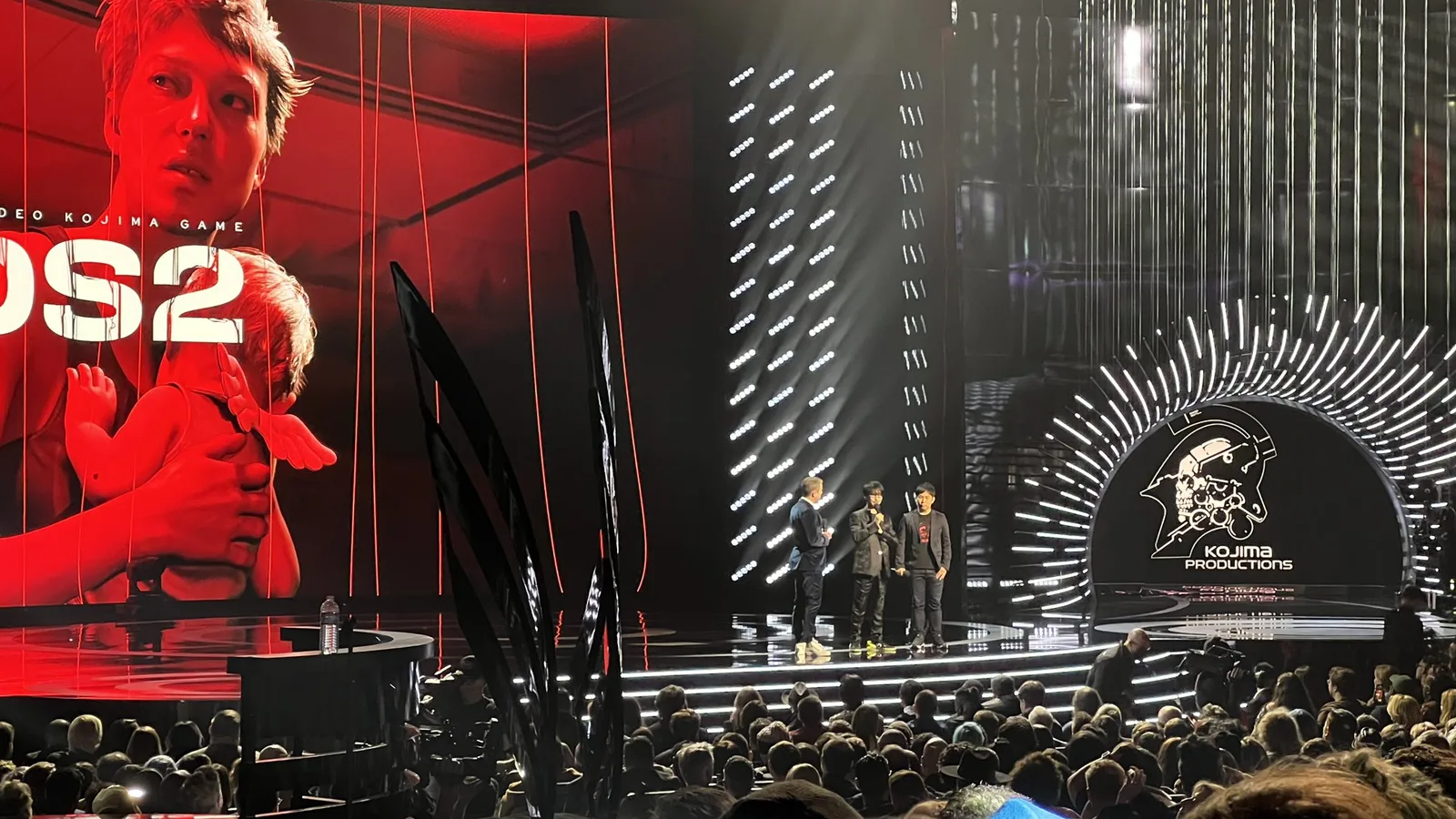 Image credit: Kojima Productions / Sony Interactive Entertainment (official announcement still, via Wikimedia Commons)
The asynchronous multiplayer systems — other players' structures, ladders, and roads bleeding into your own world — return largely unchanged, and while they're still a clever, quietly moving idea, they don't land with quite the same novelty they did in 2019. It's the sequel problem in miniature: doing the same trick twice, even brilliantly, isn't the same as inventing it.
The limits: Kojima unfiltered
Narratively, this is Kojima at his most indulgent. Cutscenes stretch even longer than before, the plot pinballs between grounded emotional beats and increasingly baroque sci-fi philosophizing, and the game asks for a level of patience with its own eccentricity that will test even sympathetic players. Critics have been notably divided here — some outlets call it one of the best games of the year, others have marked it down specifically for leaning harder into the self-indulgence rather than tightening the pacing.
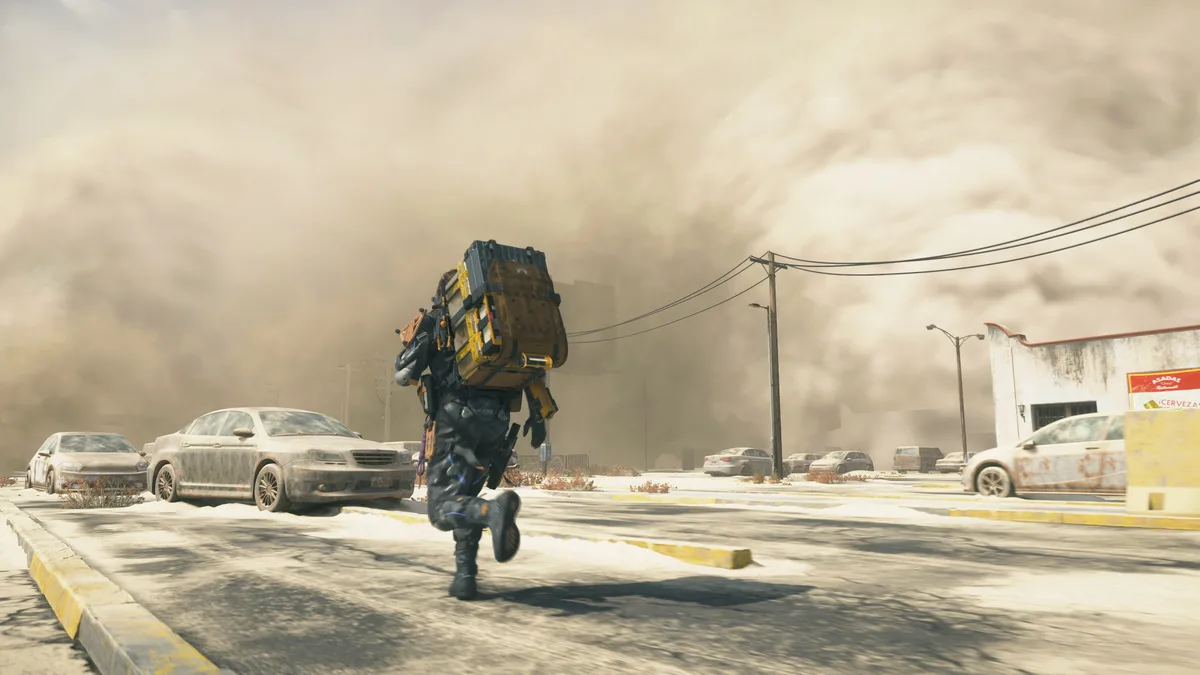 Image credit: Kojima Productions / Sony Interactive Entertainment (official PlayStation press image)
The accessibility changes are the other sticking point. Making traversal and combat friendlier is objectively good design in isolation, but it does chip away at the sense of vulnerability and dread that made the original's early hours so memorable. This is very much a case of "your mileage will vary" depending on what you valued about the first game.
Who is this for?
Fans of the original will find more of everything they loved, smoothed out and made more playable, even if a slice of that community will miss the friction. Newcomers curious about the "walking simulator with a AAA budget" premise have never had an easier entry point — the improved combat and traversal genuinely lower the barrier that turned a lot of people off the first game.
Verdict
Death Stranding 2: On the Beach is a sequel unafraid to keep being weird while quietly fixing most of its predecessor's rough edges. It doesn't reinvent the formula so much as make it more comfortable to live in — a trade some will resent, but one that results in one of 2025's most memorable, distinctive big-budget releases. 8.6/10.
Pros
- Breathtaking, varied environments across Mexico and Australia
- Smoother traversal and more robust combat make the moment-to-moment loop far less punishing
- Sound design and score remain genre-best, elevating even mundane delivery runs
- Ambitious, unapologetically strange narrative that keeps swinging
Cons
- Accessibility push softens some of what made the original's isolation so distinctive
- Story indulges Kojima's excesses more than ever, testing patience in places
- Asynchronous online systems feel slightly less novel the second time around

Elena has reviewed AAA releases for close to a decade, with a rule she never breaks: no score until the credits roll. She has covered everything from sprawling open-world epics to tight roguelike runs, and she is known for pros/cons lists that actually help you decide whether to buy. Off the clock she is replaying old JRPGs on hard mode and arguing about ending twists.


Comments
No comments yet — be the first to share your thoughts.